

Artificial intelligence is rapidly evolving from single, task-specific models into coordinated systems of specialized agents that collaborate to solve complex problems. Instead of asking one large model to handle everything, organizations are increasingly deploying multiple AI agents that communicate, delegate tasks, critique each other, and iterate toward better outcomes. Frameworks like AutoGen are at the forefront of this shift, offering structured ways to design, orchestrate, and monitor multi-agent conversations and workflows with reliability and control.
TLDR: AI agent frameworks like AutoGen allow developers to coordinate multiple specialized AI agents that collaborate to complete complex tasks. These frameworks provide structured communication, role management, memory handling, and tool integration. By organizing AI systems into teams—such as planners, analysts, and reviewers—organizations gain improved reliability, scalability, and task decomposition. As enterprise use grows, agent orchestration is becoming a foundational layer in advanced AI deployments.
The traditional approach of prompting a single model has limitations. Complex tasks—such as writing production-ready software, conducting multi-step research, or managing business operations—often require planning, checking, delegation, and refinement. These are not single-step processes. Agent frameworks address this limitation by dividing responsibilities across multiple models or instances that interact in structured ways.
The Core Idea Behind Multi-Agent Coordination
At its foundation, a multi-agent framework treats AI systems as collaborative participants in a workflow. Each agent has:
- A defined role (e.g., planner, researcher, coder, reviewer)
- Communication rules governing how it interacts with others
- Access to tools or APIs for retrieving or executing information
- Memory mechanisms for maintaining context across steps
Rather than one monolithic output, the system becomes a structured conversation with delegation and iteration built in.

For example, in a software development scenario:
- A Planner Agent outlines the architecture.
- A Developer Agent writes code.
- A Reviewer Agent critiques the output.
- A Tester Agent executes validation scripts.
This mirrors real-world organizational structure and introduces checks and balances into AI execution flows.
What AutoGen Brings to the Table
AutoGen, introduced by Microsoft Research, is one of the most prominent frameworks enabling this orchestration model. It provides developers with infrastructure to define autonomous agents, manage structured dialogues, and automate iterative interactions.
Key capabilities include:
- Conversational Orchestration: Agents can message each other in structured dialogue loops.
- Human-in-the-Loop Control: Users can intervene at checkpoints.
- Tool Invocation: Agents can execute code, call APIs, or retrieve documents.
- Flexible Role Assignment: Developers define system prompts that shape agent specialization.
What distinguishes AutoGen is not only its ability to connect agents, but its support for controlled autonomy. Developers can constrain agent interactions, impose termination conditions, and monitor outputs for safety or quality.
Why Multi-Agent Systems Matter
The move toward coordinated AI agents reflects broader realities about complex problem-solving. Sophisticated tasks require decomposition. No single prompt can reliably handle extended reasoning across multiple domains without drift or hallucination.
Multi-agent systems provide:
- Task Decomposition: Breaking complex goals into structured subtasks.
- Redundancy and Review: Agents critique and refine each other’s outputs.
- Scalability: Additional agents can be introduced for specialization.
- Traceability: Conversation logs create auditable reasoning chains.
For enterprises in regulated industries, traceability and transparency are particularly critical. Agent frameworks enable detailed insight into how outputs were derived, supporting compliance and governance initiatives.
Architecture of a Typical Agent Framework
Although implementations vary, most AI agent frameworks share a layered architecture:
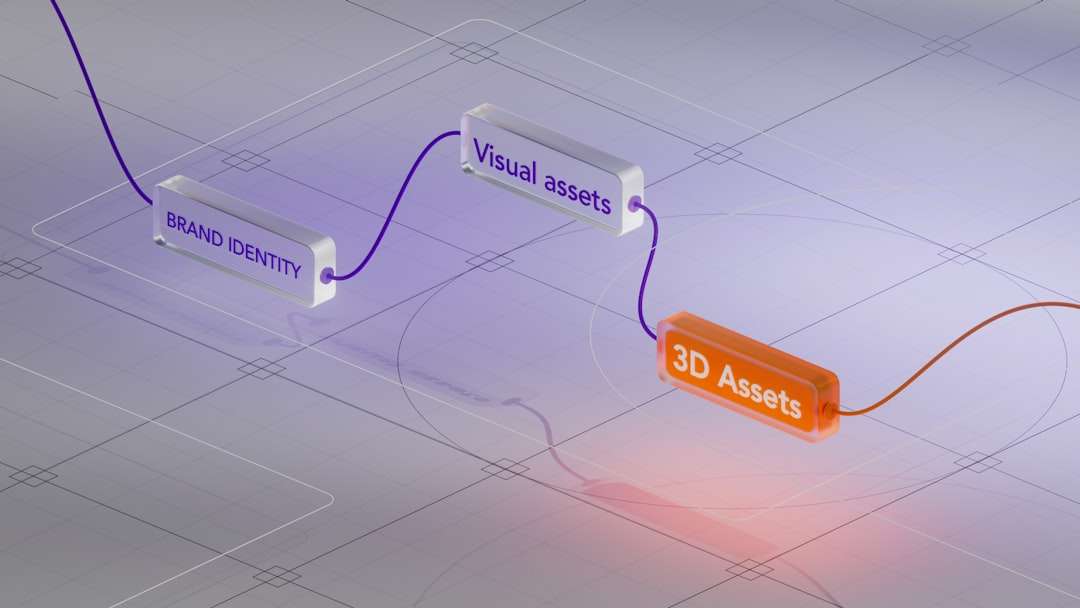
- Agent Layer: Specialized AI entities with defined roles.
- Communication Layer: Messaging protocols and conversation loops.
- Tool Layer: External systems such as search engines, databases, code interpreters.
- Control Layer: Rules governing iteration, stopping conditions, and escalation.
This modularity supports extensibility. Organizations can plug in proprietary models, internal data systems, or enterprise software within the same orchestration environment.
Other Prominent AI Agent Frameworks
While AutoGen is a leading solution, several frameworks enable multi-agent coordination, each with different design philosophies.
- LangGraph: An extension of LangChain for managing stateful, graph-based workflows.
- CrewAI: Focused on role-based agent collaboration using structured team metaphors.
- OpenAI Swarm: Lightweight orchestration for multi-agent conversation experiments.
- MetaGPT: Designed to simulate software development team structures.
These frameworks vary in maturity, complexity, extensibility, and production readiness.
Comparison of Major Multi-Agent Frameworks
| Framework | Primary Focus | Strengths | Best For |
|---|---|---|---|
| AutoGen | Structured conversational orchestration | Flexible agent roles, tool integration, human oversight | Enterprise multi-step automation |
| LangGraph | Graph based stateful workflows | Advanced control flow, persistent memory | Complex production pipelines |
| CrewAI | Team simulation model | Clear role abstraction, intuitive collaboration structure | Business process modeling |
| MetaGPT | Software team simulation | Engineering oriented role definitions | Automated code generation projects |
Enterprise Use Cases
Multi-agent frameworks are not experimental curiosities. They are being explored and deployed in real-world settings across industries.
1. Software Development Automation
Agent teams generate specifications, write code, test, and revise iteratively.
2. Financial Analysis
One agent extracts data; another performs risk modeling; another reviews outputs for anomalies.
3. Legal and Compliance Review
Agents extract clauses, compare contracts to regulatory standards, and flag inconsistencies.
4. Research and Knowledge Work
Specialized agents gather sources, synthesize findings, and validate citations.
Such systems reduce manual coordination steps while preserving structured oversight.
Risks and Governance Considerations
While powerful, coordinated AI agents introduce new challenges.
- Error Propagation: If an early-stage agent generates flawed assumptions, downstream agents may amplify them.
- Autonomy Drift: Unconstrained loops can lead to unintended extended reasoning.
- Security Exposure: Tool invocation increases surface area for vulnerabilities.
- Accountability Complexity: Responsibility must be clearly defined in regulated settings.
Frameworks like AutoGen mitigate these risks through:
- Explicit termination conditions
- Role isolation
- Logging and traceability
- Human approval checkpoints
However, governance must be built intentionally, not retrofitted after deployment.
Design Principles for Successful Implementation
Organizations considering agent orchestration should follow structured principles:
- Start with Clear Task Boundaries: Avoid conflating exploratory thinking with execution workflows.
- Define Explicit Roles: Ambiguous responsibilities reduce performance reliability.
- Limit Autonomy Gradually: Increase independence only after validation.
- Maintain Observability: Logging and analytics are crucial for debugging and accountability.
- Integrate Human Oversight Strategically: Not every step requires review, but critical checkpoints should.
When implemented correctly, multi-agent systems resemble digital operational teams—precise, auditable, and capable of sustained structured collaboration.
The Strategic Outlook
AI is progressing beyond single-model dominance toward distributed intelligence. This shift mirrors earlier transitions in computing—from standalone servers to distributed cloud systems. Multi-agent frameworks are the orchestration layer that makes distributed AI viable.
As models become more capable, specialization becomes more powerful. One agent may optimize for reasoning depth, another for retrieval accuracy, another for safety filtering. Coordination enables leverage.
The long-term trajectory suggests that enterprises will not interact with a single AI system but with structured AI teams composed of domain-specialized agents. Frameworks like AutoGen provide the infrastructure necessary to design, constrain, and scale these systems responsibly.
In serious, production environments, orchestration is not optional—it is essential. Multi-agent coordination introduces structure where unstructured prompting once dominated. It embeds collaboration, review, and governance into artificial intelligence workflows. For organizations seeking reliability as well as power, AI agent frameworks represent a critical next step in the intelligent systems landscape.