



As artificial intelligence continues to push the boundaries of what’s creatively possible, the world of fiction writing is undergoing a dramatic transformation. Writers are increasingly adopting AI tools to brainstorm ideas, outline plotlines, and even co-author entire novels. But with all this innovation comes a heated and ongoing debate: How much AI is too much when it comes to fiction writing?
TL;DR
Writers are increasingly using AI tools to augment their creative process, sparking debates about the authenticity and originality of AI-assisted fiction. On Reddit and other forums, opinions vary widely—from embracing AI as a collaborator to condemning it as a threat to genuine creativity. The key issues revolve around transparency, dependence, and the risk of homogenized storytelling. While AI can offer efficiency and inspiration, the heart of the story should still come from the writer’s human experience.
Creative Partner or Crutch?
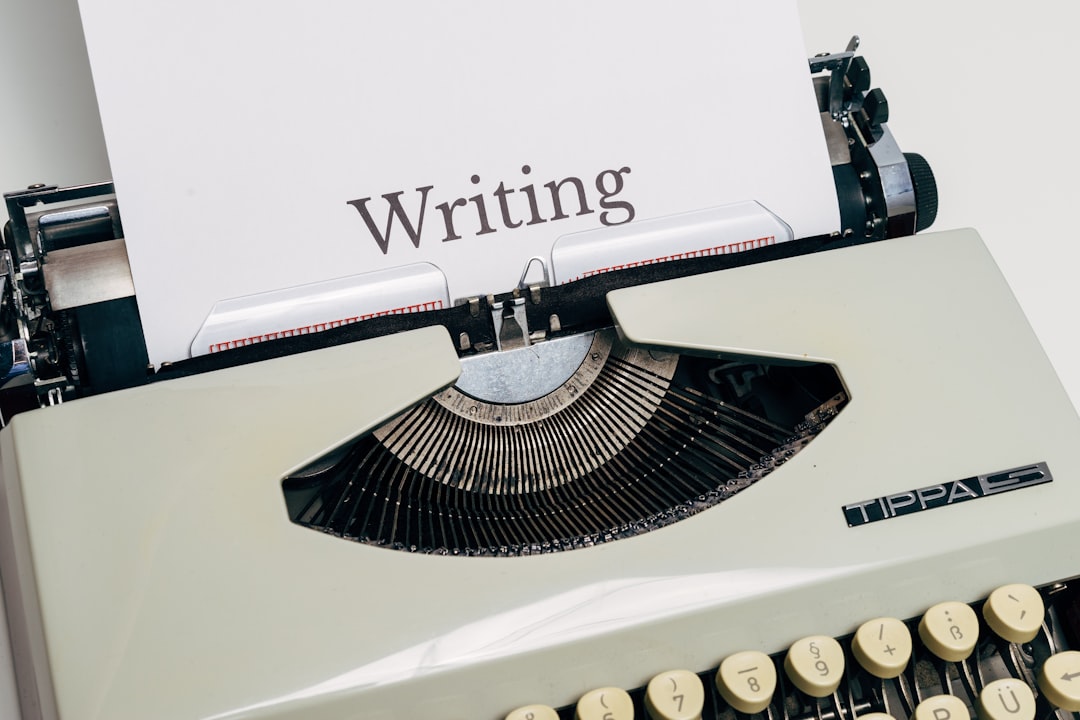
One of the most contentious aspects of AI-generated fiction is the concern over authenticity. Reddit threads such as r/writing and r/AskAuthors have seen passionate discussions on everything from GPT-4’s role in flash fiction to whether a book co-written with AI should be labeled differently. For many, AI represents a tool—just like grammar checkers or typewriters once did. For others, it represents a substitute for the very essence of human storytelling.
Writers on Reddit frequently raise questions like: Am I still the author if the AI wrote most of the dialogue? or Is it cheating if I use an AI to generate a plot twist? The answers vary, but they often come down to how much effort the human author puts into shaping the AI output into something personal and meaningful.

The Role of AI in the Creative Process
There are different levels in which writers incorporate AI into their storytelling:
- Idea Generation: Using AI to brainstorm prompts or character arcs.
- Editing Aid: Leveraging AI for grammar checks, sentence restructuring, or tone adjustment.
- Co-Writing: Actively using AI to complete scenes or entire chapters alongside human input.
- Ghostwriting: Letting the AI produce the majority of the story, with minimal human involvement.
While the first two are generally accepted—and even lauded—for their efficiency, the latter two often draw criticism. This is largely because they risk replacing rather than supporting the author’s voice.
Reddit’s Role in the Debate
Communities like r/writing and r/ChatGPT serve as digital arenas where these ethical dilemmas are thrashed out in real time. Threads often explore questions like:
- Can AI-generated fiction win literary awards?
- Should authors disclose when AI tools were used?
- Is AI-generated fiction diluting the craft?
Interestingly, younger and newer writers tend to be more open to experimentation, viewing AI as an exciting new tool. More experienced writers, particularly those who’ve toiled for years to develop a unique voice, sometimes see it as a threat to human originality.
Originality vs. Uniformity
Another major point of contention is the perceived “sameness” of AI-generated content. While AI can produce convincing narrative structures, critics argue that it often falls short on nuance, subtext, and emotional complexity. This raises concerns that AI-assisted fiction may gradually homogenize the literary landscape, reducing rich, textured storytelling into formulaic predictability.
Interestingly, Reddit users have begun conducting their own “AI vs Human” challenges, posting narrative excerpts and inviting others to guess the source. While AI often impresses, these experiments typically highlight that truly memorable writing is marked by subtle emotion and distinctive voice—traits that are still uniquely human.

Should Disclosure Be Required?
One of the more practical questions being debated is whether writers should disclose when an AI tool played a substantial role in crafting their work. Some argue that full transparency maintains reader trust and creative integrity. Others believe it’s no one’s business how a writer crafts their work, as long as the final product resonates.
This debate is not just ethical, but also legal. Platforms like Amazon and Apple Books currently lack robust policies dictating the use of AI in published content. In contrast, traditional publishing houses have started including clauses in contracts that ask authors to disclose the use of generative tools.
Maintaining the Human Element
In the midst of all the technology and transformation, one truth remains undisputed: readers connect with stories that reflect human experiences. AI lacks lived experience, personal struggle, and deep emotional context—all elements that infuse fiction with poignancy and depth.
To strike a balance, many Reddit writers advocate for a collaborative model—using AI to enhance rather than replace. For instance, an AI might suggest a riveting plot twist, but the writer adds the emotional legs to carry it forward. In this way, authors can harness technology while keeping their unique voice intact.
Conclusion
The rise of AI in fiction writing is opening up exciting possibilities but also presenting serious ethical and creative questions. As long as authors maintain control, transparency, and intentionality in their creative process, AI can serve as a valuable companion. However, the soul of fiction—its humanity—must remain in the writer’s hands, not the machine’s code.
FAQ: AI in Fiction Writing
-
Q: Can AI write a full-length novel on its own?
A: Technically, yes. AI can generate long-form text, but the resulting work often lacks the cohesion, emotional depth, and originality of a human-written piece. -
Q: Is using AI to help with fiction considered cheating?
A: That depends on perspective. Many see it as a modern tool like spell-checking software; others view heavy reliance as diminishing creative integrity. -
Q: Should authors disclose the use of AI in their work?
A: There’s no universal rule, but full disclosure is encouraged in professional circles and traditional publishing to maintain transparency. -
Q: Are publishers accepting AI-assisted manuscripts?
A: Some are, but many require disclosure. A few even prohibit the use of generative AI due to ethical concerns. -
Q: Can AI help overcome writer’s block?
A: Absolutely. Many authors use AI tools to brainstorm scenes, characters, or settings when stuck.