



Image recognition algorithms are at the core of many modern technologies, enabling computers to interpret and understand visual information from the world. From unlocking smartphones with a glance to powering autonomous vehicles and medical diagnostics, these algorithms have become deeply integrated into everyday life. They rely on advanced mathematical models and vast amounts of data to identify objects, faces, patterns, and even emotions within images.
TLDR: Image recognition algorithms allow computers to analyze and interpret visual data, typically using machine learning and deep learning models such as convolutional neural networks (CNNs). They work by processing images into numerical representations, extracting meaningful features, and classifying or identifying objects based on trained patterns. These systems improve over time with more data and training. Today, they power applications ranging from social media tagging and security systems to healthcare diagnostics and self-driving cars.
What Are Image Recognition Algorithms?
Image recognition algorithms are computational methods designed to identify and classify objects, features, or patterns within digital images. They aim to replicate — and sometimes exceed — human vision capabilities by detecting shapes, colors, textures, and relationships between visual elements.
At a high level, these algorithms perform three main tasks:
- Detection – Determining whether a specific object or feature is present in an image.
- Classification – Assigning a label to an entire image (e.g., “cat” or “car”).
- Segmentation – Dividing an image into meaningful sections or identifying pixel-level object boundaries.
Early image recognition systems relied on manually engineered rules. Engineers programmed specific criteria, such as detecting edges or color ranges, to determine whether an object was present. However, these systems struggled with variations in lighting, angles, and backgrounds. The rise of machine learning dramatically changed this landscape.
The Foundations: How Computers See Images
Computers do not see images the way humans do. Instead, an image is represented as a grid of pixels, each containing numerical values that represent color intensities. In a color image, each pixel typically contains three values corresponding to red, green, and blue (RGB) channels.


For example, a simple 100×100 pixel image contains 10,000 pixels. If each pixel has three color values, that means 30,000 numerical inputs must be processed. Image recognition algorithms analyze these numbers and search for meaningful patterns.
The challenge lies in transforming raw pixel values into higher-level representations such as edges, shapes, textures, and eventually full objects. This transformation happens through a series of computational steps.
Traditional Image Recognition Methods
Before deep learning became dominant, image recognition relied on feature extraction methods. Engineers created algorithms to detect specific visual patterns, such as:
- Edge detection (identifying boundaries of objects)
- Corner detection
- Texture descriptors
- Shape analysis
After extracting these features, traditional machine learning models like support vector machines (SVMs) or decision trees were used to classify images based on the engineered features.
While effective in controlled environments, these methods required extensive human expertise and struggled with complex or variable real-world images.
The Role of Machine Learning
Machine learning introduced a more adaptive approach. Instead of explicitly programming rules, developers trained algorithms on large datasets of labeled images. By analyzing thousands or millions of examples, models learned to recognize patterns automatically.
The workflow typically includes:
- Collecting and labeling image data.
- Splitting data into training and testing sets.
- Training a model to learn from labeled examples.
- Evaluating performance and adjusting parameters.
However, the real breakthrough in image recognition came with deep learning.
Deep Learning and Convolutional Neural Networks (CNNs)
Deep learning models, particularly convolutional neural networks (CNNs), revolutionized image recognition. CNNs are specifically designed to process image data efficiently and accurately.
A CNN consists of multiple layers that transform input images into increasingly abstract representations:
- Convolutional layers – Apply filters to detect features such as edges, curves, and textures.
- Activation functions – Introduce non-linearity to help model complex patterns.
- Pooling layers – Reduce spatial dimensions while retaining important features.
- Fully connected layers – Combine extracted features for final classification.
Early layers in a CNN might detect simple edges. Deeper layers combine edges into shapes, shapes into objects, and eventually entire scenes. This hierarchical approach closely mirrors how the human visual cortex processes information.
Training an Image Recognition Model
Training a deep learning model involves feeding it thousands or millions of labeled images. During training:
- The model makes predictions on input images.
- The predictions are compared to actual labels.
- An error (loss) is calculated.
- The model adjusts internal parameters using a process called backpropagation.
This iterative process gradually improves accuracy. The more diverse and comprehensive the dataset, the better the model performs in real-world conditions.
However, training deep learning models requires significant computational power, often utilizing GPUs or specialized hardware accelerators.
Object Detection and Advanced Applications
Beyond simple classification, advanced image recognition systems perform object detection and image segmentation.

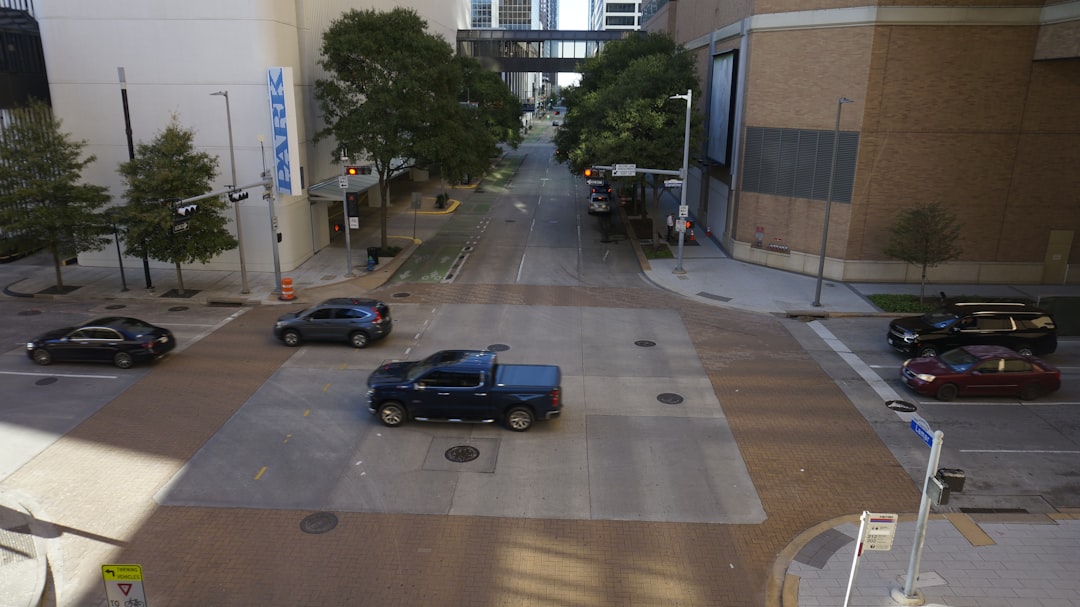
In object detection, the algorithm identifies multiple objects within an image and draws bounding boxes around them. For example, in a street scene, it may detect pedestrians, cars, traffic signs, and bicycles simultaneously.
Image segmentation goes further by labeling each pixel according to its object category. This level of detail is critical in medical imaging, satellite analysis, and autonomous navigation.
Real-World Applications
Image recognition algorithms are widely used across industries:
- Healthcare – Analyzing X-rays, MRIs, and pathology slides for disease detection.
- Security – Facial recognition and surveillance monitoring.
- Retail – Visual search and automated checkout systems.
- Automotive – Self-driving cars detecting obstacles and traffic signals.
- Agriculture – Monitoring crop health and detecting pests.
- Social media – Tagging people and organizing photos.
These applications rely not only on accuracy but also on speed, scalability, and ethical considerations.
Challenges and Limitations
Despite significant advancements, image recognition algorithms face several challenges:
- Bias in data – Models trained on limited or unbalanced datasets may perform poorly for certain groups or conditions.
- Privacy concerns – Facial recognition raises ethical and legal questions.
- Adversarial attacks – Small, subtle image modifications can sometimes mislead models.
- High computational cost – Training requires substantial resources.
Researchers continue working to improve robustness, fairness, and interpretability to ensure responsible deployment.
The Future of Image Recognition
The future of image recognition lies in more efficient architectures, multimodal AI systems, and improved generalization capabilities. Emerging models can integrate image data with text and audio, enabling broader contextual understanding.
Edge computing is also reducing reliance on cloud processing, allowing image recognition to run directly on smartphones, cameras, and IoT devices. This shift enhances privacy and reduces latency.
As datasets grow and algorithms improve, image recognition systems will become more accurate, explainable, and seamlessly embedded into daily life.
FAQ
-
What is the difference between image recognition and computer vision?
Image recognition is a subset of computer vision. While image recognition focuses on identifying and classifying objects in images, computer vision encompasses a broader range of tasks, including motion analysis and scene reconstruction. -
What are convolutional neural networks (CNNs)?
CNNs are deep learning models specifically designed to process and analyze image data. They use layered structures to detect increasingly complex features, making them highly effective for visual recognition tasks. -
How accurate are image recognition algorithms?
Modern systems can achieve accuracy rates exceeding 95% on certain benchmark datasets. However, real-world performance varies depending on data quality, environmental conditions, and use cases. -
Do image recognition algorithms require large datasets?
Yes, most deep learning models require large and diverse labeled datasets to perform well. However, techniques like transfer learning can reduce data requirements by leveraging pre-trained models. -
Are image recognition systems secure?
While generally reliable, they can be vulnerable to adversarial attacks or bias-related issues. Developers must implement strong security and ethical safeguards. -
Can image recognition work in real time?
Yes. With optimized models and powerful hardware, many systems operate in real time, such as facial recognition at airport checkpoints or object detection in autonomous vehicles.
Image recognition algorithms represent one of the most transformative developments in artificial intelligence. By converting pixels into meaningful insights, they bridge the gap between visual information and machine understanding, enabling a new era of intelligent systems across industries.