



Edge computing has rapidly evolved from a niche architectural concept into a foundational element of modern digital infrastructure. As applications become more latency-sensitive and globally distributed, organizations are shifting computation away from centralized data centers and toward the “edge” of the network—closer to users. Among the most influential tools enabling this transformation are edge execution platforms such as AWS Lambda@Edge, which allow developers to run code across global points of presence with minimal operational overhead and near-instant scalability.
TLDR: Edge computing platforms like AWS Lambda@Edge enable developers to run code closer to end users, reducing latency and improving performance. These tools integrate directly with global content delivery networks to process requests in real time at distributed locations. Organizations use edge computing for personalization, security, authentication, and content optimization. While powerful, edge computing requires thoughtful architectural planning to manage complexity and cost.
At its core, edge computing is about proximity and performance. Traditional cloud architectures rely heavily on centralized regions, which can introduce latency when serving users across continents. Every millisecond matters in applications such as e-commerce, gaming, media streaming, and financial transactions. Running logic at the network’s edge ensures that requests are processed as close to the user as possible, significantly improving responsiveness.
The Fundamentals of Edge Execution
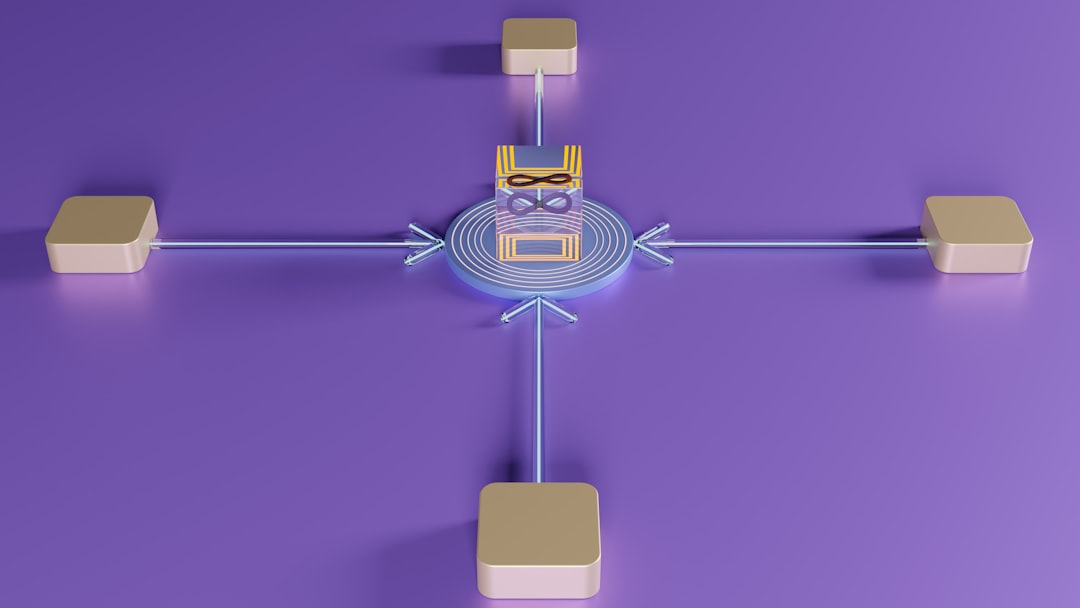
Tools like AWS Lambda@Edge operate in conjunction with a global content delivery network (CDN). When a request reaches a CDN edge location, custom code can execute before the request is forwarded to the origin server. This enables sophisticated real-time processing without deploying infrastructure in every geography.
- Request modification: Adjusting headers, redirecting users, or rewriting URLs.
- Authentication and authorization: Validating tokens before content access.
- Personalization: Delivering dynamic content based on geographic or behavioral data.
- Security enforcement: Blocking malicious traffic closer to the source.
Unlike traditional server deployments, edge functions are automatically replicated across global edge locations. Developers write the function once, and the platform ensures geographic distribution and scaling.


Why AWS Lambda@Edge Stands Out
AWS Lambda@Edge integrates directly with Amazon CloudFront, one of the most widely deployed CDNs worldwide. This integration provides several distinct advantages:
- Global reach: Code executes across numerous edge locations worldwide.
- Event-driven model: Functions trigger automatically on viewer requests, origin requests, origin responses, or viewer responses.
- No server management: There are no instances to provision or maintain.
- Elastic scaling: Capacity scales in response to traffic patterns.
This seamless combination of CDN performance and serverless execution dramatically simplifies global application delivery. Instead of spinning up regional infrastructure clusters, teams can extend logic at the network’s perimeter in minutes.
Performance and Latency Benefits
Latency reduction remains the primary driver of edge adoption. When code runs in centralized cloud regions, every request must travel long distances across the internet backbone. By contrast, edge platforms process requests at the nearest distribution node.
The advantages are measurable:
- Faster content delivery for geographically distant users.
- Improved application responsiveness for interactive platforms.
- Lower origin server load, since many tasks are resolved before reaching centralized infrastructure.
In performance-sensitive industries such as online retail, even small latency improvements can lead to measurable revenue gains. Faster page load times correlate directly with higher engagement and conversion rates.
Security at the Edge
Security controls benefit significantly from edge computing. Instead of routing malicious traffic to central infrastructure, filtering and inspection can occur at the first point of contact. This reduces attack surface exposure and enhances resilience.
Edge functions support:
- IP reputation filtering
- Bot mitigation logic
- Custom request validation
- Header sanitization and enforcement
By deploying these protections globally, organizations create a distributed defensive layer that scales automatically alongside traffic volume.

Personalization and Dynamic Content
Modern users expect tailored digital experiences. Edge computing plays a central role in enabling dynamic content customization without sacrificing speed.
For instance, Lambda@Edge can:
- Serve localized language versions based on geographic data.
- Present region-specific promotions in e-commerce environments.
- Route users to optimal origins based on performance metrics.
- Modify APIs responses dynamically before delivery.
Because these transformations occur at the network’s edge, users experience personalization without the added latency of centralized processing. The result is both speed and contextual relevance, a combination that is increasingly essential in competitive digital markets.
Operational Simplicity and Scalability
One of the defining features of serverless edge platforms is their operational simplicity. There are no virtual machines to maintain, no region-by-region deployments, and no manual scaling configurations.
From an architectural perspective, this provides:
- Reduced operational overhead
- Automatic global replication
- Integrated monitoring and logging
- Usage-based billing
However, this simplicity at deployment time does not eliminate the need for thoughtful design. Edge environments often have limitations in execution time, memory allocation, and language support. Teams must carefully structure functions to remain lightweight and efficient.
Architectural Considerations
Moving logic to the edge introduces new design questions. Not all workloads are suitable for edge execution. Typically, edge functions should be:
- Stateless
- Short-running
- Latency-sensitive
Heavy computational tasks, complex database transactions, or operations requiring persistent storage are generally better suited for regional cloud services. A hybrid architecture—combining central cloud resources with distributed edge logic—often provides the optimal balance.
Organizations must also account for version propagation delays and debugging complexity. Since code runs globally, updates must be carefully tested to avoid inconsistent behavior across edge locations.


Cost Implications
The financial model of edge computing typically follows a pay-per-execution structure. While this can be highly cost-efficient at scale, poorly optimized functions may generate unnecessary invocations.
Cost management best practices include:
- Minimizing execution duration
- Reducing unnecessary triggers
- Caching aggressively when possible
- Monitoring invocation metrics regularly
When applied strategically, edge computing can even reduce infrastructure costs by decreasing origin server traffic and bandwidth usage.
Comparison with Other Edge Platforms
While AWS Lambda@Edge is a dominant solution, the broader edge ecosystem includes platforms such as Cloudflare Workers, Fastly Compute, and Azure Edge Functions. These tools share common characteristics: distributed execution, serverless deployment models, and integration with CDN networks.
The primary differences often relate to:
- Supported programming languages
- Cold start performance
- Geographic footprint
- Integration breadth within respective cloud ecosystems
Enterprises already deeply integrated into the AWS ecosystem may find Lambda@Edge particularly compelling due to identity management compatibility, monitoring integration, and unified billing.
The Future of Global Code Execution
Edge computing continues to evolve toward more sophisticated capabilities, including persistent storage options, machine learning inference at the edge, and tighter integration with Internet of Things (IoT) devices. As 5G networks expand, edge processing will become even more critical in supporting ultra-low-latency applications.
Emerging use cases include:
- Real-time video analytics
- Augmented and virtual reality applications
- Autonomous systems coordination
- Global API acceleration strategies
The trajectory is clear: distributed logic will increasingly complement centralized infrastructure architectures.
Conclusion
Edge computing platforms such as AWS Lambda@Edge represent a significant shift in how code is deployed and executed globally. By bringing computational logic closer to end users, organizations can achieve lower latency, stronger security postures, and more personalized digital experiences. While challenges in architecture and cost management exist, the operational benefits and performance improvements are substantial.
For enterprises seeking to deliver high-performance, globally consistent applications, edge computing is no longer an experimental technology. It is a strategic capability—one that redefines how modern software systems are built, scaled, and secured in an increasingly interconnected world.