

As organizations increasingly rely on machine learning models to power critical decisions, the need to monitor the quality and behavior of data in production has become essential. Even the most accurate model can degrade over time if the data it receives begins to shift in subtle or dramatic ways. This phenomenon, known as data drift, can quietly reduce performance, introduce bias, and erode trust in AI systems. To combat this risk, companies are turning to AI data observability tools like WhyLabs to gain deep visibility into their data pipelines and model behavior.
TLDR: AI data observability tools like WhyLabs help organizations monitor, detect, and respond to data drift and model performance issues in real time. These platforms track changes in data distributions, feature behavior, and predictions to prevent silent model failures. By offering alerts, dashboards, and root cause analysis, they ensure that machine learning systems remain reliable and trustworthy in production environments. Without observability, even high-performing models can quickly become liabilities.
Unlike traditional software systems, machine learning models depend heavily on evolving datasets. Real-world data is rarely static; customer behaviors change, market conditions shift, and upstream data processes evolve. Observability tools provide the infrastructure necessary to monitor these changes, identify anomalies, and enable proactive troubleshooting before business impact occurs.
What Is AI Data Observability?
AI data observability refers to the practice of continuously monitoring and analyzing machine learning data, features, and predictions to ensure models perform as expected. It extends beyond simple logging by offering:
- Feature-level monitoring
- Data drift detection
- Prediction monitoring
- Data quality validation
- Model performance tracking
Traditional monitoring tools focus on infrastructure metrics such as CPU usage or latency. In contrast, AI observability addresses the unique challenges of machine learning systems, particularly around data behavior and statistical changes.
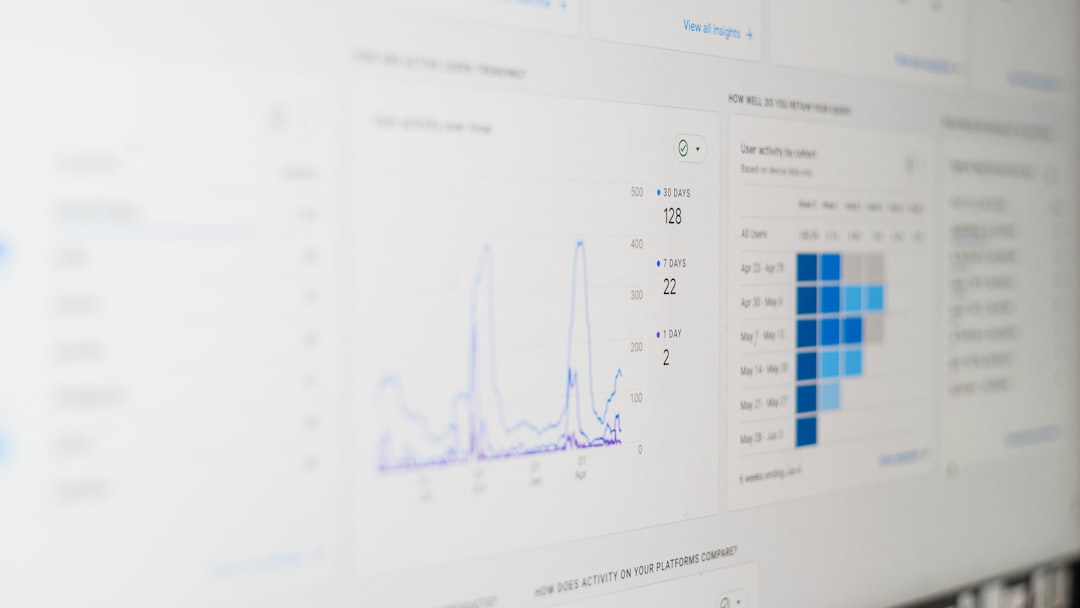
The real power of these tools lies in their ability to surface meaningful signals from high-volume data streams. Rather than overwhelming teams with raw logs, they generate statistical summaries and insights that highlight anomalies and deviations from established baselines.
Understanding Data Drift
Data drift occurs when the statistical properties of input data change over time. It can take several forms:
- Covariate drift: Changes in input feature distributions.
- Concept drift: Changes in the relationship between inputs and outputs.
- Prediction drift: Shifts in the model’s output distribution.
- Label drift: Changes in the distribution of target variables.
For example, a fraud detection model trained on pre-pandemic consumer behavior might struggle when shopping habits dramatically shift. Without observability mechanisms, such performance degradation might go unnoticed until financial losses accumulate.
Data observability platforms automatically compute statistical measures such as:
- Population stability index
- Kolmogorov Smirnov statistics
- Divergence metrics
- Feature distribution comparisons
These metrics help data teams quickly identify which features are drifting and how severely.
The Role of WhyLabs in AI Observability
WhyLabs has emerged as one of the leading platforms in AI data observability. It focuses on allowing teams to monitor machine learning inputs, outputs, and intermediate features at scale. By integrating into ML pipelines, WhyLabs continuously profiles data and generates compact summaries known as sketches that enable efficient large-scale monitoring.
Key capabilities typically include:
- Real-time drift alerts
- Automated anomaly detection
- Feature-level diagnostics
- Root cause analysis tools
- Data privacy and security safeguards
What distinguishes observability tools like WhyLabs is their emphasis on actionable insights rather than raw telemetry. Instead of simply stating that drift has occurred, they provide visualizations and contextual information to help teams understand why it happened.

Other AI Data Observability Tools
While WhyLabs is a prominent solution, the ecosystem includes several other tools designed to address ML observability challenges. Some notable platforms include:
- Arize AI
- Fiddler AI
- Monte Carlo Data
- Evidently AI
- Superwise
Each tool has strengths depending on organizational needs, infrastructure complexity, and industry requirements.
Comparison of Leading AI Data Observability Tools
| Tool | Primary Focus | Drift Detection | Model Explainability | Deployment Style |
|---|---|---|---|---|
| WhyLabs | Data and feature observability | Advanced statistical monitoring | Feature level diagnostics | Cloud based with pipeline integrations |
| Arize AI | Model performance monitoring | Strong drift analytics | Built in explainability tools | SaaS platform |
| Fiddler AI | Explainability and fairness | Drift monitoring included | Advanced interpretability features | Cloud and enterprise deployments |
| Monte Carlo | Data pipeline monitoring | Pipeline anomaly detection | Limited ML specific explainability | Cloud first |
| Evidently AI | Open source monitoring | Drift reports and dashboards | Basic performance insights | Self hosted or integrated |
Why Observability Is Critical for Modern AI Systems
Deploying a model is not the end of the machine learning lifecycle; it marks the beginning of continuous oversight. Organizations face several risks without observability:
- Silent model degradation: Performance slowly declines without triggering alarms.
- Bias amplification: Shifting data introduces unfair or discriminatory outcomes.
- Regulatory compliance issues: Lack of transparency hinders auditability.
- Operational disruptions: Broken pipelines feed incomplete or corrupted data.
AI observability tools create a feedback loop between production and development teams. When drift is detected, data scientists can retrain or recalibrate models, update features, or adjust thresholds before end users are significantly affected.

How Data Observability Works in Practice
In a typical implementation, an observability platform integrates directly into the data pipeline. As data flows through the system, the tool generates statistical summaries for each feature and stores historical baselines. Subsequent data batches are compared against these baselines to detect deviations.
Key steps often include:
- Baseline creation: Establishing reference distributions from training or historical data.
- Continuous profiling: Capturing statistical summaries in production.
- Drift detection: Running statistical tests to measure divergence.
- Alert generation: Notifying stakeholders when thresholds are exceeded.
- Root cause analysis: Visualizing affected features and segments.
This structured approach transforms what was once reactive troubleshooting into proactive model governance.
Benefits Across Industries
AI data observability tools are particularly valuable in sectors where accuracy and compliance are critical:
- Financial services: Monitoring credit risk and fraud detection models.
- Healthcare: Ensuring patient data distributions remain consistent.
- Ecommerce: Tracking recommendation system performance.
- Autonomous systems: Detecting sensor drift and environmental changes.
In heavily regulated industries, audit trails and transparent drift metrics also support legal and compliance requirements. Observability tools generate documentation that explains when and why models changed behavior.
Challenges and Considerations
Despite their advantages, AI observability tools are not a cure-all. Organizations must still address:
- Alert fatigue: Excessive notifications can overwhelm teams.
- Data privacy concerns: Monitoring systems must protect sensitive data.
- Integration complexity: Legacy systems may require customization.
- Cost considerations: Comprehensive monitoring can be resource intensive.
Successful adoption often requires cross-functional collaboration between data engineers, data scientists, DevOps, and compliance officers. Clearly defined thresholds and governance policies help prevent unnecessary noise while maintaining effective oversight.
The Future of AI Observability
As machine learning systems become more autonomous and embedded in core business processes, observability will likely evolve into a standard component of ML infrastructure. Emerging trends include:
- Automated retraining triggers
- Integrated fairness monitoring
- Real-time edge device observability
- Unified data and model monitoring platforms
In the future, observability may not simply detect drift but actively orchestrate corrective actions. Automated safeguards could dynamically recalibrate models or pause decision-making pipelines when risk thresholds are exceeded.
Ultimately, tools like WhyLabs represent a shift toward resilient, accountable AI systems. By making invisible data shifts visible, they empower organizations to maintain trust, performance, and compliance in an increasingly data-driven world.
Frequently Asked Questions (FAQ)
-
What is data drift in machine learning?
Data drift refers to changes in the statistical distribution of input data over time, which can reduce a model’s accuracy and reliability if not addressed. -
Why is AI data observability important?
It ensures machine learning systems perform consistently in production by monitoring feature distributions, detecting anomalies, and generating alerts when issues arise. -
How does WhyLabs detect drift?
WhyLabs uses statistical profiling and comparison techniques to measure divergence between baseline and live data, highlighting significant deviations. -
Is data observability the same as model monitoring?
Not exactly. Data observability focuses primarily on monitoring input features and data quality, while model monitoring also tracks prediction accuracy and performance metrics. -
Can small companies benefit from AI observability tools?
Yes. Even smaller ML deployments can suffer from silent drift, and observability tools help prevent performance loss and reputational damage. -
Are there open source options available?
Yes. Tools like Evidently AI provide open source capabilities for drift detection and model monitoring, though enterprise platforms may offer more advanced automation and scalability.