


GraphQL federation has emerged as a critical architecture pattern for organizations building scalable, real-time APIs across distributed services. As systems grow more complex and microservices become the norm, maintaining a unified data graph without sacrificing performance or flexibility is essential. Platforms like Hasura have helped popularize real-time GraphQL APIs with minimal configuration, but many robust alternatives now exist that offer federation, schema stitching, real-time subscriptions, and distributed service orchestration.
TLDR: If you need a GraphQL federation solution similar to Hasura for building real-time APIs, there are several mature options worth evaluating. Apollo Federation, The Guild’s Mesh, WunderGraph, StepZen, and Netflix DGS each provide powerful approaches to unifying distributed services under a single graph. The right choice depends on your architecture, scalability needs, and operational preferences. All five tools support production-ready federation while addressing performance, security, and real-time data challenges.
Why Federation Matters for Real-Time APIs
In traditional monolithic systems, APIs are centralized and easier to manage. However, modern applications depend on distributed microservices, serverless functions, and heterogeneous data stores. Federation enables teams to:
- Compose multiple schemas into one unified GraphQL API.
- Scale teams independently without tightly coupling services.
- Maintain real-time capabilities through subscriptions and event-driven architectures.
- Improve performance by distributing workload across services.
Hasura is well known for automatically generating real-time GraphQL APIs over PostgreSQL and other data sources. But for organizations needing multi-service federation, advanced gateway control, or highly customized orchestration, alternative tools may offer better alignment.

1. Apollo Federation
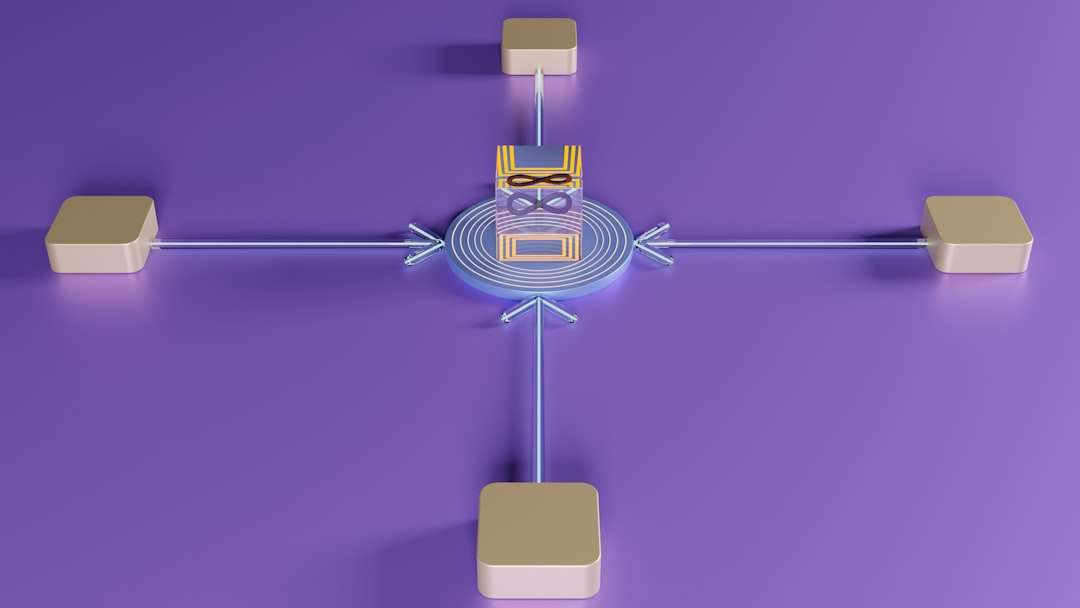
Apollo Federation is often considered the industry standard for federated GraphQL architecture. Developed by Apollo GraphQL, it allows multiple subgraphs (independent GraphQL services) to compose into a single “supergraph” managed by an Apollo Gateway.
Key Strengths
- Mature federation specification with broad adoption.
- Schema ownership by independent teams.
- Advanced query planning and performance optimization.
- Rich observability and monitoring tools.
Apollo Federation excels in enterprises where multiple teams own different domains such as billing, authentication, or product data. Each team can extend shared types without tight coupling.
For real-time functionality, Apollo supports subscriptions and integrates well with WebSockets and event-driven systems. While it requires more operational configuration than Hasura’s plug-and-play setup, its flexibility and governance controls make it suitable for large-scale distributed environments.
Best for: Enterprises that need granular service ownership, advanced gateway management, and strong observability features.
2. GraphQL Mesh (The Guild)
GraphQL Mesh, developed by The Guild, takes a different approach. Instead of requiring each service to be a GraphQL subgraph, Mesh can wrap other API technologies—REST, gRPC, OpenAPI, SOAP, databases, and more—into a unified GraphQL schema.
Key Strengths
- Transforms existing APIs into GraphQL without rewriting services.
- Supports schema stitching and federation.
- Highly extensible plugin ecosystem.
- Strong TypeScript integration.
This makes GraphQL Mesh particularly appealing for organizations migrating gradually toward GraphQL federation. Instead of forcing every service to adopt GraphQL natively, Mesh acts as a composition layer.
For real-time APIs, Mesh can integrate subscriptions and streaming protocols while maintaining compatibility with legacy systems. Compared to Hasura, which primarily focuses on database-first GraphQL generation, Mesh is more API-aggregation-centric.
Best for: Hybrid architectures that need GraphQL federation across varied API types.
3. WunderGraph
WunderGraph positions itself as a developer-focused platform for unified APIs, combining GraphQL federation with backend orchestration and security.
Key Strengths
- Unified API layer combining multiple backends.
- Built-in authentication and authorization.
- Type-safe API generation for frontend clients.
- Simplified real-time integration.
What distinguishes WunderGraph is its opinionated full-stack orientation. It emphasizes developer productivity and tight frontend-backend integration, often generating strongly typed SDKs to ensure consistency.
For real-time scenarios, WunderGraph supports subscriptions and event-driven updates, making it competitive with Hasura’s live-query capabilities. However, it provides more configurable control over aggregation and authentication layers compared to Hasura’s database-centric automation.
Best for: Teams that want an integrated developer workflow with built-in federation and security features.
4. StepZen
StepZen focuses on schema federation and data orchestration with a strong emphasis on connecting multiple backends quickly. It allows developers to declaratively compose data sources into a unified GraphQL API using configuration rather than extensive custom code.
Key Strengths
- Declarative schema extensions and transformations.
- Supports REST, databases, and other GraphQL APIs.
- Managed hosting options.
- Rapid setup and deployment.
StepZen’s approach resembles Hasura in its simplicity but extends beyond direct database modeling by enabling broader service orchestration. It is particularly useful when multiple third-party APIs must be combined into a cohesive data graph.
In real-time contexts, StepZen integrates with event-driven backends and WebSocket-based subscription systems. While not as feature-heavy as Apollo Federation in enterprise observability, it offers a streamlined solution for mid-sized applications and fast-moving development teams.
Best for: Projects needing quick federation and multi-source aggregation without significant infrastructure overhead.

5. Netflix DGS (Domain Graph Service)
Netflix DGS is a framework built for running GraphQL services in Java, deeply integrated with Spring Boot. Although it is not a gateway tool by itself, it works seamlessly within federated architectures and supports Apollo Federation specifications.
Key Strengths
- Strong Java and Spring Boot ecosystem integration.
- Federation-compliant subgraph development.
- High performance for large-scale systems.
- Extensive production testing within Netflix infrastructure.
DGS is highly attractive for enterprise Java teams seeking production-grade GraphQL services. It allows domain-focused teams to build federated subgraphs that plug into Apollo Gateway or other federation layers.
For real-time APIs, DGS supports subscriptions and integrates effectively with reactive frameworks. Compared to Hasura—which abstracts away much backend logic—DGS gives developers deeper control at the code level.
Best for: Java-based enterprises requiring configurable, code-driven federated GraphQL services.
Choosing the Right Federation Tool
Selecting the right alternative to Hasura depends on several architectural priorities:
- Database-first automation: Hasura remains strong here, while StepZen provides similar ease with broader source flexibility.
- Enterprise-scale federation governance: Apollo Federation leads.
- API aggregation across non-GraphQL services: GraphQL Mesh and StepZen are well suited.
- Full-stack developer integration: WunderGraph excels.
- Java ecosystem integration: Netflix DGS is a natural fit.
Real-time features such as subscriptions, event streaming, and live queries are essential in modern applications such as financial dashboards, collaborative tools, logistics systems, and IoT platforms. All five tools discussed here support these capabilities either natively or through extension frameworks.
Architectural Considerations for Real-Time Federation
When deploying federated GraphQL systems at scale, technical leadership should evaluate:
- Latency and query planning optimization across services.
- Security boundaries between federated domains.
- Schema evolution and versioning strategies.
- Observability and performance monitoring.
- Operational complexity of managing gateways and subgraphs.
Unlike single-database GraphQL solutions, federated architectures introduce cross-service dependencies. Observability tools, distributed tracing, and rate limiting become significantly more important in production environments.
Final Thoughts
Hasura remains a powerful solution for rapidly building real-time APIs over databases, but the ecosystem around GraphQL federation has matured considerably. Organizations now have multiple robust tools capable of orchestrating complex, distributed services into a unified, real-time data graph.
Whether prioritizing enterprise governance with Apollo Federation, flexible API aggregation through GraphQL Mesh, developer-centric workflows via WunderGraph, declarative orchestration with StepZen, or Java-native federation using Netflix DGS, teams can select a solution aligned with their technical and organizational structure.
In an era where real-time responsiveness and distributed scalability define competitive advantage, investing in the right GraphQL federation strategy is not merely a technical decision—it is a foundational architectural commitment.